Home Insulation Services in Loxahatchee, FL
Local Insulation Contractor Expertise
In Loxahatchee, FL, homes sit on sprawling lots in rural, high-performance terrain. Heat and humidity are relentless. An insulation contractor in Loxahatchee, FL who understands both spray foam and blown-in solutions can protect your home from moisture intrusion, reduce cooling costs, and keep your family comfortable year-round. This page covers what you need to know about insulation choices in this acreage-heavy, storm-prone region.
How We Work
From assessment to airsealing, here's what the process looks like in Loxahatchee homes.
What's Involved
Insulation work follows a clear sequence. We start by inspecting your attic, crawl space, or walls to understand current conditions. Then we recommend spray foam or blown-in based on your home's structure, moisture risk, and budget.
Inspect & Assess
Walk the attic or crawl space. Check for gaps, moisture signs, pest damage. Document R-value and identify air leaks.
Recommend & Plan
Suggest spray foam for crawl spaces or moisture-prone areas. Offer blown-in for vented attic top-ups or retrofit jobs.
Prepare the Space
Seal large openings, remove debris, protect ducts and vents. Ensure safe access for installers and equipment.
Install the Insulation
Apply spray foam or blow fiberglass/cellulose to spec. Control application to avoid overfill and ensure uniform coverage.
Verify & Finish
Check R-value, look for voids, confirm ventilation paths. Clean up and walk you through results and next steps.
You'll always know what's happening next—and when.
Our Services
Spray foam and blown-in insulation each solve different problems. Here's what we offer.
Spray Foam Insulation
Spray foam expands on contact and seals every gap. For Loxahatchee homes with crawl spaces, moisture risk, or unvented attics, it blocks humid air and provides a vapor barrier in one shot.
- Closed-cell foam for maximum moisture resistance
- Stops air leakage completely—no settling
- Best for Florida's high humidity and storm seasons
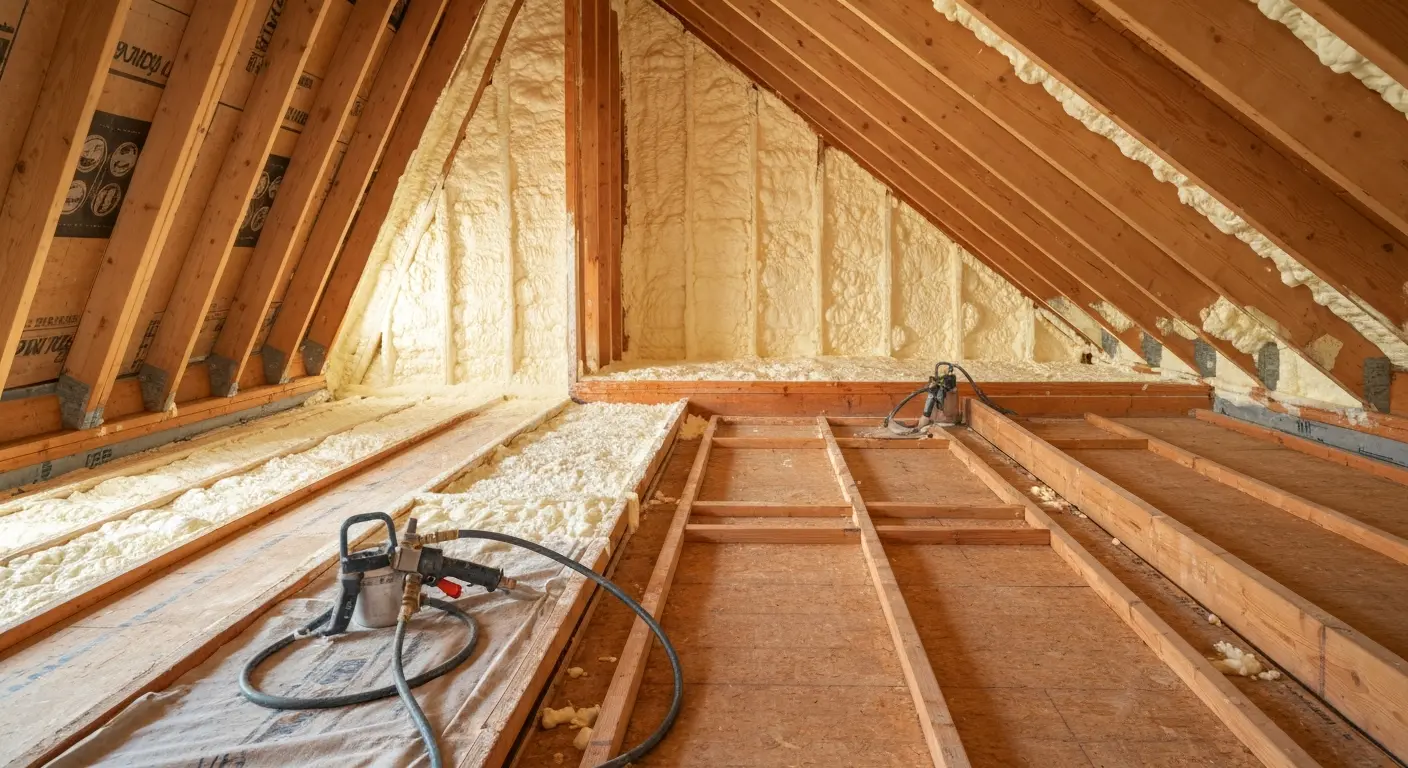
Spray foam application in Loxahatchee attic—dense seal against moisture and air infiltration.
Blown-In Insulation
Loose fiberglass or cellulose blown into attics and walls fills irregular spaces and builds depth fast. Ideal for vented attics or adding R-value on top of existing insulation without major disruption.
- Cost-effective for retrofit and top-up jobs
- Reaches tight corners vented attics can't match
- Fiberglass or cellulose options available
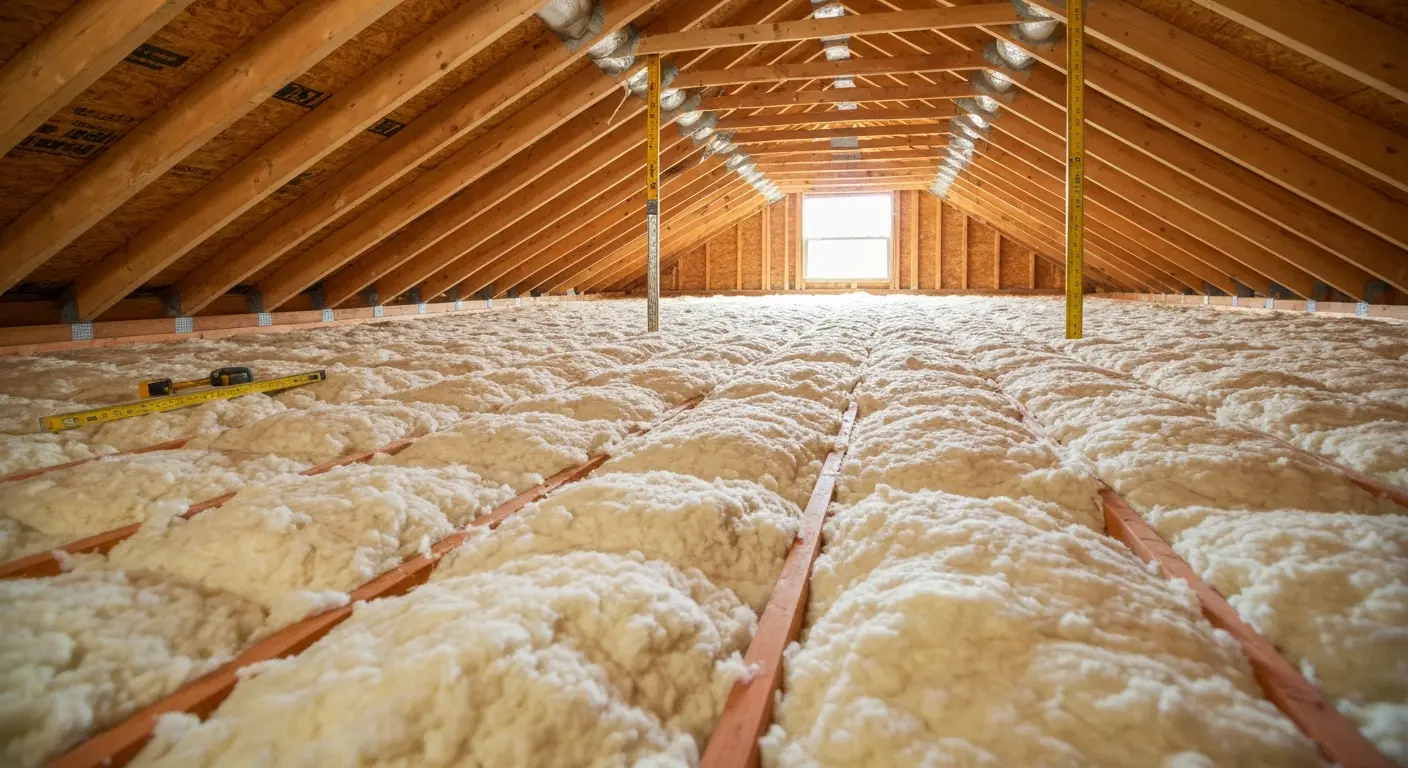
Blown-in fiberglass installed in Loxahatchee vented attic for quick R-value boost.
Loxahatchee homes with acreage often have larger attics and crawl spaces. We size the job right and choose the material that matches your climate risk.
Why Local Expertise Matters
Loxahatchee isn't like every Florida neighborhood. Here's why your insulation choice must fit this place.
Humidity Is the Real Enemy
South Florida sits in IECC Climate Zone 1—the hottest, most humid zone in the nation. Moisture vapor sneaks into attics and walls daily. Standard insulation can trap moisture and breed mold. Spray foam actively resists humidity and prevents condensation that destroys wood and drywall.
Sprawling Lots & Crawl Spaces
Many Loxahatchee homes sit on 1 to 20-acre parcels with rural-style vented crawl spaces. Ground moisture rises constantly in this acreage setting. Blown-in insulation won't work under the house. Closed-cell spray foam is the only real solution—it seals and insulates simultaneously, stopping moisture from ground level up.
Storm Readiness
Loxahatchee took an EF3 tornado in 2024. Wind-driven rain can penetrate walls and attics. Spray foam adds structural rigidity and keeps moisture out. It won't settle or compress like loose fill under pressure.
Key Insight: Florida Building Code requires R-30 minimum for vented attics and R-20 for unvented spray foam assemblies. A contractor familiar with Loxahatchee's soil, water table, and rural lot sizes will design the right insulation approach.
Serving Loxahatchee & Nearby Areas
We work throughout Loxahatchee and the surrounding communities.
The Service Area
We service Loxahatchee (33470), Loxahatchee Groves (33470), and nearby Wellington, Royal Palm Beach, and The Acreage. Whether your home is on Southern Boulevard near Lion Country Safari or tucked into the rural interior along quiet farm roads, we reach you.
Getting Here
From West Palm Beach, head west on Southern Boulevard (State Road 80) or Okeechobee Boulevard for 17–20 miles. Look for rural neighborhoods with wide-open spaces, equestrian trails, and low HOA presence. Call or text for directions to your specific property.
Dirt roads and private drives are common in Loxahatchee. Give us your full address or landmark—we know the area and can navigate safely with our equipment.
Frequently Asked Questions
What's the difference between spray foam and blown-in insulation?
Spray foam expands on contact and creates an airtight seal—best for moisture-prone areas like crawl spaces. Blown-in is loose material blown into open spaces and works well for vented attics and top-ups. Spray foam blocks air and moisture; blown-in fills depth at lower cost.
Is spray foam worth it in Loxahatchee's humid climate?
Yes. Florida's humidity makes vapor control critical. Spray foam prevents mold, condensation, and structural damage in ways blown-in can't. The upfront cost pays back faster in hot, humid climates where cooling dominates energy bills.
Can I use blown-in insulation in my crawl space?
No. Blown-in doesn't work in crawl spaces because ground moisture will saturate it. Closed-cell spray foam is the correct choice—it seals and insulates simultaneously, stopping moisture from entering your home's structure.
What R-value do I need for my Loxahatchee attic?
Florida Building Code requires R-30 minimum for vented attics in Climate Zone 1. If you convert to an unvented attic with spray foam under the roof deck, R-20 is acceptable. We assess your space and recommend the right value for your home's design.
Will insulation help me lower my energy bills?
Absolutely. Up to 44% of a Florida home's energy use goes to cooling. Proper insulation—especially spray foam's airtight seal—reduces cooling load and delivers immediate savings. Many homeowners see 10 to 50% drops in HVAC costs depending on current insulation and home size.
Does spray foam hold up in hurricanes and storms?
Yes. Closed-cell spray foam adds structural rigidity to walls and roofs. It resists wind-driven moisture and prevents rain penetration better than traditional insulation. In storm-prone areas like Loxahatchee, this is a real advantage.
DISCOVER WHAT OUR CUSTOMERS HAVE TO SAY ABOUT US
REVIEWS
proudly serving these areas
Fort Pierce, FL
Green Acres, FL
Indiantown, FL
Jupiter, FL
Loxahatchee, FL
Okeechobee, FL
Palm Beach Gardens, FL
Palm City, FL
READY TO take the next step?
get a free quote TODAY!
QUICK LINKS
our services
service areas
operating HOURS
Mon: 8:00 am - 5:00 pm
Tue: 8:00 am - 5:00 pm
Wed: 8:00 am - 5:00 pm
Thu: 8:00 am - 5:00 pm
Fri: 8:00 am - 5:00 pm
Sat: 9:00 am - 3:00 pm
Sun: Closed - Closed