Home Insulation Services in Stuart, FL
Local Insulation Contractor Expertise
Downtown Stuart and South Stuart homeowners face one core challenge: Florida's heat and humidity demand insulation that actually performs. Whether you're protecting a historic home in Frazier Addition, cooling a modern condo in Willoughby, or sealing a commercial property near Witham Field, the right insulation contractor in Stuart, FL stops energy waste before it costs you.
This page covers spray foam and blown-in insulation solutions designed for Martin County's coastal climate, plus concrete-focused guidance for local contractors and property owners.
How We Work
A clear process keeps your project on track and your expectations aligned
Our Install Process
We start every insulation project with a site visit, humidity check, and consultation on building types common to Stuart—from concrete-block commercial spaces to newer vinyl-sided homes in Mariner Village. Here's what happens next.
Assess & Plan
We measure walls, attics, and crawl spaces. Check for moisture intrusion and thermal gaps. Recommend spray foam or blown-in based on your structure and local code.
Prep & Protect
Clear vents, seal off living areas, and set up containment. Humidity-sensitive work requires careful drying conditions—especially in high-moisture zones common near the St. Lucie River and coastal areas.
Install & Inspect
Apply spray foam or blown-in insulation to spec. Verify coverage in attics, wall cavities, and rim joists. Test R-values to confirm thermal performance meets Martin County building standards.
Final Walkthrough
Review the finished work, answer your questions, and provide care tips. Leave behind documentation for permits, maintenance, and future reference.
You'll always know what's happening next—and why.
Our Services
We specialize in the two insulation types that solve Stuart's biggest problems
Spray Foam Insulation
Spray foam expands to seal every gap—critical in humid climates where air leakage drives cooling costs. Open-cell and closed-cell foam options handle moisture and structural reinforcement differently. Closed-cell offers better water resistance for coastal exposure.
Common applications: attic rims, cathedral ceilings, new construction in Summerfield, Mariner Sands, and commercial properties near downtown Stuart.
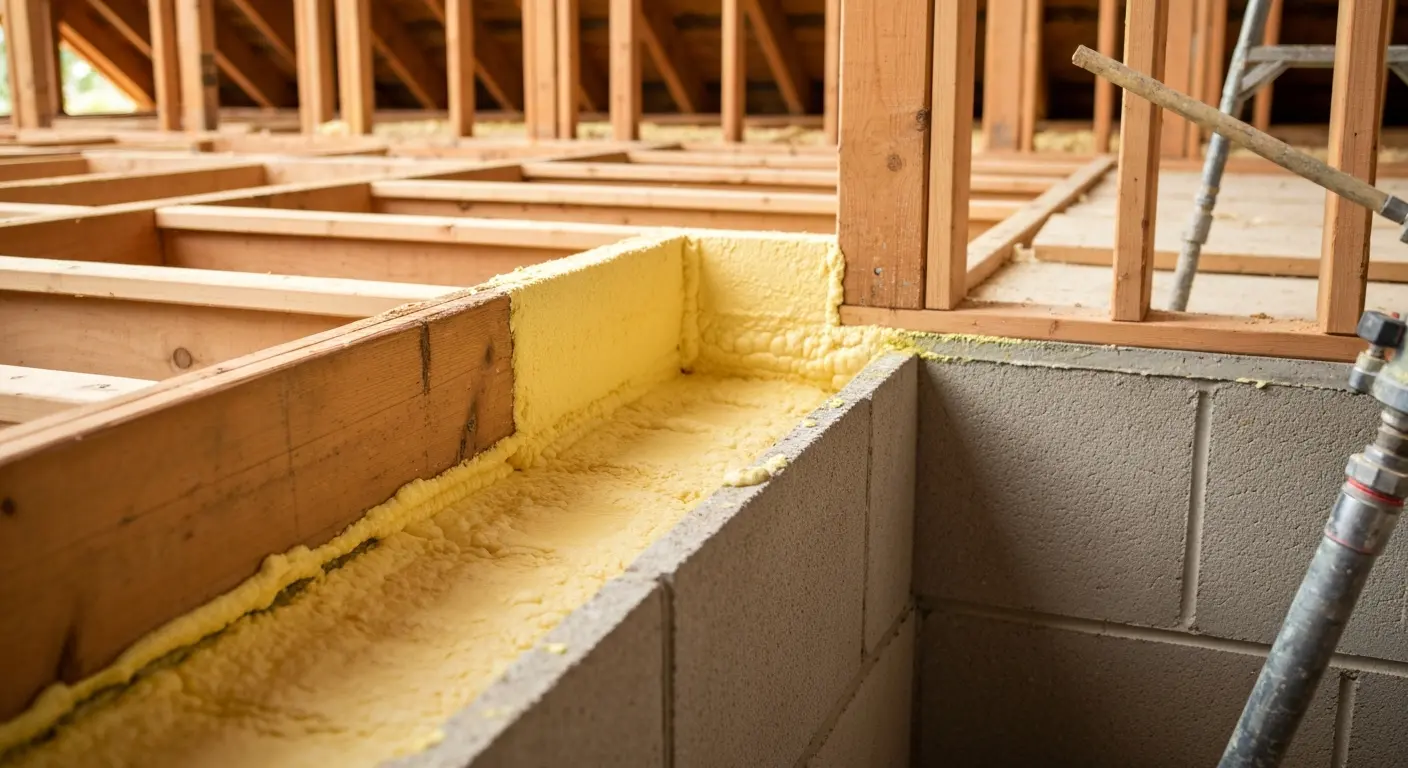
Spray foam sealing attic rim in South Stuart home
Blown-In Insulation
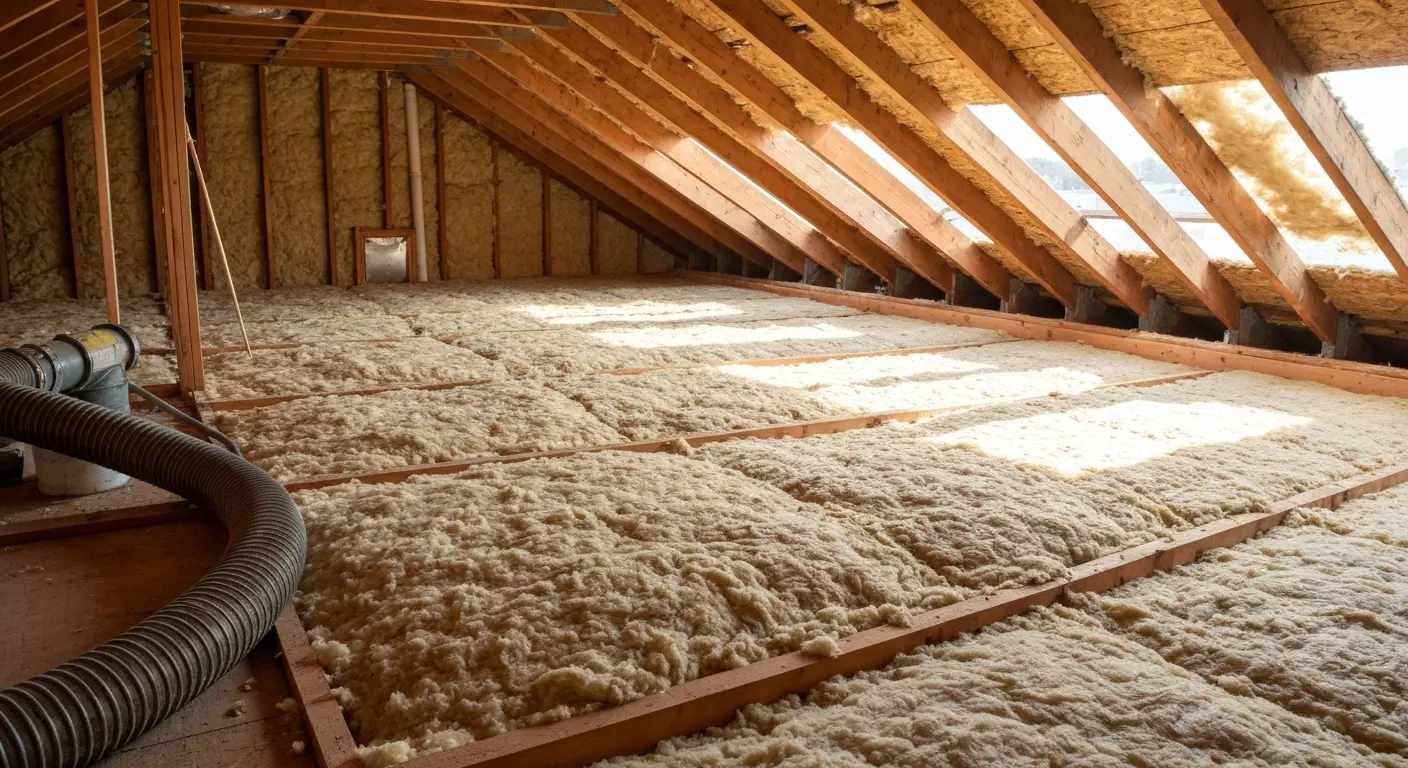
Blown-in cellulose filling attic in Willoughby area
Blown-in insulation (cellulose or fiberglass) fills attics and wall cavities where access is limited. Works well for retrofit projects in historic downtown Stuart homes and newer condos. Faster to install than batt insulation and conforms to irregular framing.
Ideal for: attic top-ups, wall cavity fills, and properties where spray foam is not required by design or code.
Why Local Expertise Matters
Florida's Climate Hits Differently
Stuart sits on the Treasure Coast with year-round humidity averaging 70–85%. Summer peaks above 90%. Your insulation must resist moisture intrusion, prevent condensation, and stop air leakage—not just slow heat loss. Generic solutions fail fast.
Salt air penetrates 5+ miles inland. Concrete block, stucco, and metal structures need vapor barriers and sealers designed for corrosion resistance.
Concrete Contractor Insight: Moisture in Retail & Commercial
Retail projects and commercial structures near downtown Stuart use high-performance concrete with extra corrosion protection. Concrete surfaces need moisture monitoring before flooring or coatings. Combined with proper insulation, moisture barriers block humidity damage before it starts.
Our work pairs insulation with concrete best-practices so your building stays dry and durable.
Serving Stuart & Martin County
We work across all neighborhoods and property types in Stuart
Downtown & Historic Areas
Frazier Addition, Potsdam historic district. Older frame and masonry structures benefit from spray foam retrofits or batt upgrades.
South Stuart & Golf Communities
Mariner Village, Willoughby, Summerfield. Newer homes and condos near the golf courses and river access need updated insulation and humidity control.
Commercial & Retail
Near Witham Field, downtown shops, and North Stuart Plaza. Commercial concrete and masonry structures require specialized moisture-control strategies.
New Construction
Residential and light commercial builds throughout Martin County. Frame sizing, code compliance, and humidity management from day one.
Ready to improve your home or property's comfort and durability? Contact us today for a free consultation and estimate.
Frequently Asked Questions
What's the difference between spray foam and blown-in insulation?
Spray foam expands to seal air gaps; blown-in fills cavities with loose material. Spray foam offers higher R-values and better air sealing; blown-in is faster, less invasive, and good for retrofits.
How does humidity affect insulation performance in Stuart?
High humidity and salt air can degrade insulation if moisture barriers are missing or improperly installed. Closed-cell foam resists moisture better than open-cell; blown-in needs vapor barriers on the interior side in Florida's cooling climate.
Do I need a permit for insulation work in Stuart?
Most attic and wall insulation retrofits require a Martin County permit, especially spray foam. We handle permitting and inspections so you stay compliant with local building codes.
Can insulation help protect concrete from moisture damage?
Yes. When paired with vapor barriers, sealers, and proper drainage, insulation and humidity control prevent sweating slabs, coating failure, and mold growth on concrete floors common in retail and commercial spaces.
What areas of Stuart do you serve?
We serve all of Martin County, including downtown Stuart, South Stuart, Mariner Village, Willoughby, Summerfield, and commercial areas near Witham Field and North Stuart Plaza.
DISCOVER WHAT OUR CUSTOMERS HAVE TO SAY ABOUT US
REVIEWS
proudly serving these areas
Fort Pierce, FL
Green Acres, FL
Indiantown, FL
Jupiter, FL
Loxahatchee, FL
Okeechobee, FL
Palm Beach Gardens, FL
Palm City, FL
READY TO take the next step?
get a free quote TODAY!
QUICK LINKS
our services
service areas
operating HOURS
Mon: 8:00 am - 5:00 pm
Tue: 8:00 am - 5:00 pm
Wed: 8:00 am - 5:00 pm
Thu: 8:00 am - 5:00 pm
Fri: 8:00 am - 5:00 pm
Sat: 9:00 am - 3:00 pm
Sun: Closed - Closed