Protect the access path
The crew establishes the work route, protects interior surfaces and prepares equipment so old material is moved out without unnecessary spread through occupied areas.
Reviewed by Victor Panet, Founder · U.S. veteran and HVAC professional
Removal can make sense when existing insulation is wet, contaminated, badly disturbed or blocking access to areas that need to be repaired first.
What we are looking for
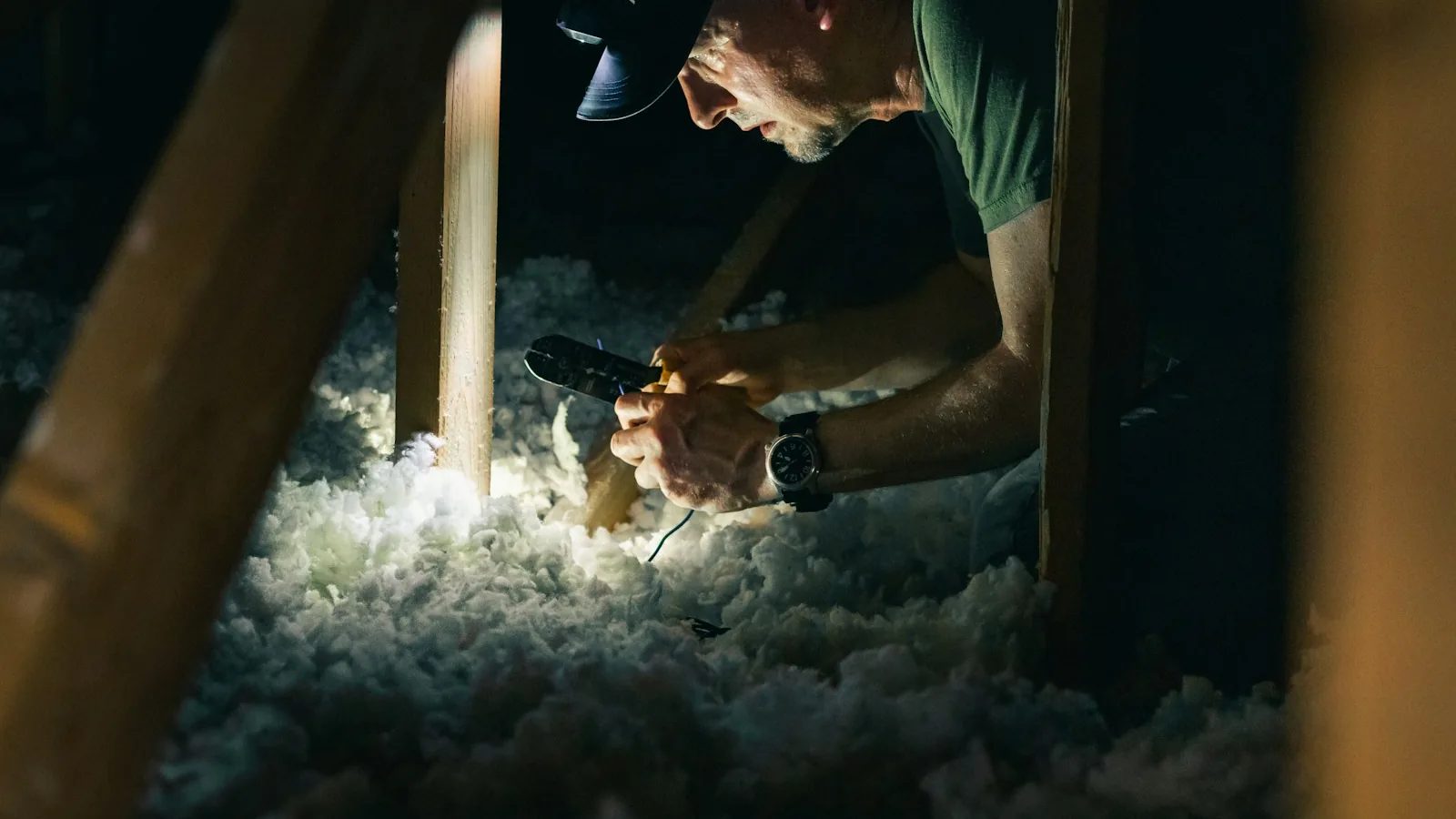
Homeowners may notice odor, staining, pest activity, debris after roof work or insulation that has been trampled into uneven piles. Removal is justified by the condition of the existing material, not by its age alone.
Old insulation does not automatically need to be removed. Dry, clean and compatible material can often remain beneath a planned top-up. Removal becomes useful when the existing layer prevents access to the ceiling plane, contains contamination, has been wet, is badly disturbed or conflicts with a new assembly. The decision should be based on what the material is doing now, not a sales claim that every attic must be stripped before improvement.
Reason for removal
wetness, contamination, disturbance or incompatibility should be documented before material is discarded.
Source of damage
roof, pest, plumbing or HVAC conditions may require separate repair before new insulation.
Ceiling-plane access
we identify the leaks, penetrations and repairs that become reachable after the attic is cleared.
Material boundaries
the scope states which insulation is removed and whether any clean, useful sections remain.
Replacement plan
removal is sequenced with the next insulation system so the attic is not left open without a defined reason.
A cleanout can reveal conditions that were hidden for years. Air leaks around chases, abandoned wiring, damaged duct connections, roof staining and penetrations become easier to inspect once loose material is out of the way. That visibility is one of the main values of removal. It creates a working surface so repairs and air sealing can happen before the next insulation system covers the attic again.
The source of damage still matters. If insulation is wet because the roof leaks, the roof must be corrected. If pests contaminated the attic, exclusion and cleaning may require the appropriate specialist. Removal handles the damaged insulation and access problem; it does not replace the trade responsible for the underlying cause.
How it works
Containment, removal method, disposal and post-cleanout inspection should be defined before the crew begins disturbing old material.
The crew establishes the work route, protects interior surfaces and prepares equipment so old material is moved out without unnecessary spread through occupied areas.
Loose or damaged insulation is collected with the appropriate method for the material and condition. The scope follows the approved areas rather than indiscriminately stripping useful insulation.
Remaining debris is addressed to the level included in the proposal so the ceiling surface, penetrations and obvious defects can be inspected and prepared for the next phase.
The cleared attic is reviewed for leaks, damage, air-sealing opportunities and conditions that require another trade before replacement insulation is installed.
When this may not be the right fix
A full cleanout can add cost without adding value when the attic can be prepared and upgraded in place.
Existing insulation that is clean and suitable may remain beneath a properly planned top-up.
A few thin or displaced areas may be restored without stripping the entire attic.
Removing useful insulation without a defined repair or replacement plan can leave the home worse until the next phase is completed.
Removal should solve an access, contamination or compatibility problem. It should not be included automatically because a contractor prefers to start from a blank attic. Preserving useful material can reduce disposal, labor and project cost when the underlying ceiling plane can still be prepared adequately.
Likewise, removal is not remediation of every possible attic contaminant. Suspected hazardous material, significant biological contamination or conditions requiring licensed specialty work should be evaluated under the rules that apply to that material. The insulation scope should be explicit about what it does and does not include.
Before and during the job
Leaving unusable material in place may not create an immediate failure, but it can block inspection and tempt future work to cover a problem that never went away.
When insulation has been wet or contaminated, simply adding clean material on top mixes the new investment with an unresolved condition. It becomes harder to tell which layer is affected later, and the ceiling plane remains inaccessible for sealing or repair. Removal costs more than a straightforward top-up, but it can prevent the project from becoming a stack of old and new material with no clear boundary between them.
Heavily disturbed insulation can also leave open pathways for heat and air movement. If the material is compressed into traffic lanes or piled away from certain sections, the home may continue to experience comfort problems even though the attic technically contains insulation. Removal is one way to reset the surface when restoration in place is no longer practical.
The value of the cleanout is the access it creates. The homeowner should know what will be removed, how debris leaves the house and what happens before replacement insulation goes back in.
The crew first protects the interior route and sets up removal equipment. Work proceeds through the specified attic areas while maintaining safe access around framing, wiring and mechanical systems. Material is collected and removed from the property according to the agreed scope rather than redistributed elsewhere in the attic.
Once the area is cleared, the crew reviews the exposed ceiling plane and visible roof or mechanical conditions. Any newly revealed concern outside the insulation scope is documented so the appropriate repair can happen before the attic is covered again. Replacement insulation may follow in the same project or a later phase depending on the repairs required.
Common questions
We start with the building assembly, existing insulation, air leakage, attic or crawl-space conditions, HVAC configuration and visible moisture indicators. The recommendation follows those conditions instead of beginning with a preferred product.
Next step
We document what is wet, contaminated, disturbed or blocking repairs before recommending a cleanout.