
Confirm the assembly
We identify the intended air and thermal boundary, attic ventilation strategy, HVAC relationship, roof condition and any areas that must stay accessible. That decision controls where foam belongs and where it does not.
Reviewed by Victor Panet, Founder · U.S. veteran and HVAC professional
Spray foam can help control both heat and air leakage when the attic, roof and HVAC setup make it the right fit for the home.
What we are looking for
Homeowners usually notice the symptom first: a back bedroom that never catches up, long AC cycles, warm ceilings or an attic that feels like a separate climate zone. The system choice comes after we identify where the home is actually losing control.
A Florida attic can make a home uncomfortable in two different ways at once. Solar heat moves through the roof and ceiling assembly, while air leakage lets conditioned air escape and hot attic air move through penetrations and framing transitions. If the ducts and air handler are also in the attic, their environment matters. Moving the thermal and air boundary to the roof deck with spray foam can change the conditions around that equipment, but only when the whole assembly is planned rather than treated as a product upgrade.
Roof condition
active leaks, damaged decking or unresolved roof work must be addressed before foam hides access to the assembly.
Attic strategy
we confirm whether the attic is intended to remain vented or become a deliberately unvented assembly.
Mechanical systems
ducts, air handlers, combustion equipment and ventilation requirements affect whether the proposed boundary makes sense.
Moisture evidence
staining, damp framing and humidity concerns need an explanation before insulation is installed.
Access and thickness
framing depth, wiring, roof geometry and service access influence the material and installation plan.
Open-cell and closed-cell foam are not interchangeable labels. Open-cell foam is lighter and more vapor-open. Closed-cell foam is denser and provides more thermal resistance per inch. The right choice depends on available cavity depth, roof or wall construction, moisture behavior, required thickness and the way the building will be conditioned. A proposal that names only a foam type without explaining the assembly is incomplete.
An unvented attic also changes how humidity is managed. Spray foam does not make moisture disappear. In Florida, winter conditions can be a meaningful risk window because exterior temperatures can cool roof surfaces while indoor moisture remains present. HVAC operation, air exchange and humidity control need to be considered together so the attic does not become a sealed space with an unmanaged moisture load.
How it works
The visible application is only one part of the job. A durable scope begins with the assembly, removes conflicts, protects the building and verifies that the installed foam follows the planned thickness and coverage.
We identify the intended air and thermal boundary, attic ventilation strategy, HVAC relationship, roof condition and any areas that must stay accessible. That decision controls where foam belongs and where it does not.
Work areas are cleared, surfaces are evaluated for suitability and components that should not receive foam are masked or protected. Existing insulation may need to be moved or removed when it blocks the new boundary or hides conditions that require repair.
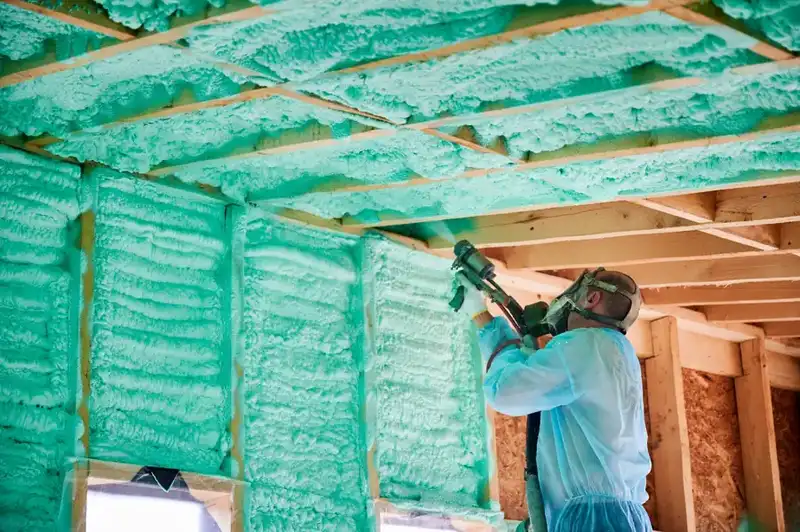
Foam is applied to the specified surfaces in lifts appropriate to the product and assembly. Coverage, transitions, penetrations and difficult framing areas matter because a missed strip can become a concentrated path for heat or air movement.
The crew checks accessible continuity, required clearances and service paths, then documents what was installed. The goal is a coherent envelope, not simply a visually thick layer of material.
When this may not be the right fix
The strongest recommendation sometimes ends with a different service. Foam should solve a defined envelope problem, not simply be the most expensive material on the menu.
Wet decking, active leaks or roof repairs come first. Foam should not be used to bury a condition that still needs access and correction.
If a vented attic is dry, the ceiling plane is sound and the main issue is thin coverage, blown-in or another attic upgrade may solve the symptom with less system change.
A sealed attic without a plan for equipment, ventilation and humidity can trade one comfort problem for another. Those relationships need to be defined first.
Spray foam can be a strong tool when air leakage and thermal control need to be combined at a roof deck or cavity. It is less compelling when the home already has a functioning vented attic and the only verified deficiency is shallow, clean insulation at the ceiling. In that case, air sealing and a measured top-up may preserve the existing assembly with less cost and complexity.
It is also not a structural repair and should not be sold as hurricane or wind-uplift protection. If the concern is roof strength, framing damage or structural performance, the appropriate roofing or engineering evaluation comes first. The insulation scope should stay inside what the material and installer can actually verify.
Before and during the job
A comfort issue does not automatically become an emergency, but repeated heat gain and air leakage can keep showing up as longer run times, uneven rooms and wasted conditioned air.
When attic heat and leakage remain uncontrolled, homeowners often compensate by lowering the thermostat, adding portable fans or replacing HVAC equipment before proving that the equipment is the source of the problem. That can increase operating cost without correcting the path where heat and air are moving. The more useful sequence is to identify the building-envelope problem first, then decide whether spray foam, a ceiling-plane repair or another scope is justified.
Delaying also matters when the attic contains disturbed insulation, open penetrations or humidity concerns that are already visible. Covering those conditions later without understanding them can make future diagnostics harder. A measured assessment now creates a baseline and helps prevent an insulation project from becoming a way to hide a roof, moisture or mechanical issue that belongs to another trade.
Spray foam work changes an important building layer, so access, ventilation, protection and cure-time instructions should be part of the scope before the crew starts.
The crew begins by confirming the areas included in the proposal and protecting floors, stored items and equipment along the access path. The work zone is isolated as needed for the product and application. Surfaces must be suitable for installation, and areas around electrical components, mechanical equipment and required service access are handled deliberately rather than sprayed indiscriminately.
During application, the installer builds coverage in controlled passes and pays particular attention to roof-wall transitions, corners and penetrations. After installation, the job is inspected for continuity and obvious defects. Re-entry, ventilation and occupancy instructions depend on the exact product and manufacturer requirements, so those instructions should come from the actual material being installed rather than a generic promise.
Common questions
We start with the building assembly, existing insulation, air leakage, attic or crawl-space conditions, HVAC configuration and visible moisture indicators. The recommendation follows those conditions instead of beginning with a preferred product.
Next step
We will evaluate where heat and air are crossing the home before recommending a spray-foam assembly.